Monday, April 25, 2011

How can you afford not to? - Week 11

 “Anybody gone into Whole Foods lately and see what they charge for arugula? I mean, they’re charging a lot of money for this stuff.” - President Barak Obama

Its amazing how little space you really need to be able to feed yourself a consistent supply of vegetables. Daryl and I are getting a salad a day out of the arugula, and we just started with 3 rows on a 2'.5"x'1.5" plot. As soon as the romaine lettuce starts getting big enough to eat, we are going to be overflowing with fresh veggies. Its only been 2.5 months since I started and laid my first seed and it could potentially last until next winter.

MARKET:
Cost of one bunch of organic arugula @ Whole Foods: $1.99
Cost of bulk baby arugula: $6.99/lb

HOME GROWN:
Cost of certified organic arugula seeds: $1.89
Cost of water: in my case, free
Cost of soil: about 2$ for that plot
Cost of fertilizer: less than $1.00
Cost of pesticides (neem oil): less than a dollar
__________________________________
Grand Total: $6.00/plot MAX for salad every night the rest of the year
(same cost as 3 bunches of arugula at the market)

And that's just the arugula!  How can you afford not to?

Benefits of Home Gardening:
  • Save money at the market
  • Sense of pride and accomplishment
  • Reduce pesticide, herbicide & GMO (Genetically Modified Organism) intake
  • Freshest food in town - picked 10 minutes before preparation
  • Mood enhancer, stress reducer, outdoor activity for the family, educational opportunity
  • Burn calories, build muscle, exposure to fresh air and sunlight for Vitamin D
  • Low in calories and high in nutrients and disease fighters
Arugula - enough for salad every night
Radishes - already harvested half of them - 2 month cycles
Elephant Garlic
Carrot greens coming up
Brandy-wine Heirloom Tomato I started from seed in January
Pictures below, starting at the top left and then clockwise: beets, sweet peas, romaine lettuce, and garden view.

Friday, April 22, 2011

Today's Harvest

Fresh cut green onions, arugula, chard and radishes
Washed, prepped, and ready to eat ...and one Stella Easter egg

Tuesday, April 19, 2011

Organic Pesticides - 100% ORGANIC NEEM OIL RESULTS

Organic pesticides, a topic VERY close to my heart.

CHEMICAL PESTICIDES ARE TOXIC TO HUMANS, our food which it permeates, our water supply, our dirt, and everything in our environment, not just pests. Just remember the exact translation of the word: PEST = an animal or plant detrimental to humans or human concerns, CIDE = originates from the Latin word caedere meaning to kill.

In one of my earlier posts, I had mentioned that I would post the results of my Organic Neem Oil test on my radishes. To make my organic and natural pesticide, I just bought 100% neem oil (oil from the Neem Tree), and diluted it with water in a spray bottle. Because the oil turns to a solid on cold days, I heat up the water a little so that it goes on well. I always to a spot test first and wait a few days to make sure the oil itself does not kill the plant. The radishes exhibited zero negative reaction to it, so I started spraying it on them about 6 weeks ago.

From the beginning, I noticed that my radishes were being munched by someone out in the garden. Noticing damage early on is important for not only the health of the plant, but the quantity and most importantly, quality of your yield. The healthier your plants are, the more they will produce.
NO Neem oil
100% organic Neem oil applied
I was willing to sacrifice one entire row of my radish crop to the pests to show all of you the results of Neem Oil, and the results were very, very interesting. It just goes to show you that NON-CHEMICAL, organic alternatives really do work. Keep in mind, this is not ROUND-UP, so you will still see a few holes in my plants, but hey, at least tonight when I am eating my salad, I can chop off the radish tops, or in other cases, eat around a few holes, instead of eating ROUND-UP.
Up close - WITHOUT Neem
Up Close - WITH  NEEM
My hero, Rachel Carson, the lady that wrote the book 'Silent Spring' because she was the first who recognized the correlation between pesticides, and toxicity to life. In short, she realized that after a little 'spring' in her neighborhood was sprayed with pesticides the week prior, it turned silent, when life had flourished just the week before. She was a pioneer in what we now call the 'environmental movement.'

When chemical pesticides are used, everything around it becomes contaminated. Most man made chemical pesticides, like Monsanto's Round-up, anything DOW Chemical makes (AGENT ORANGE), and the now banned DDT are neurotoxins, which disrupt the neurotransmitters in our brains, causing everything from mental or emotional changes, vision loss, weakness, numbness in the arms and legs, to sexual impairment.
DDT, now banned in the US
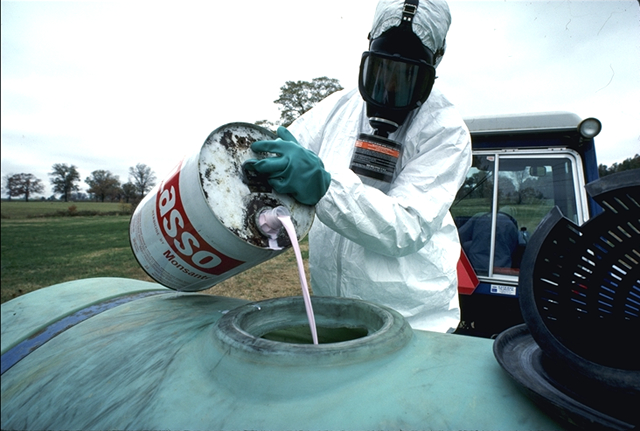
Why would you put chemicals on your FOOD that have to be labeled toxic, or dangerous, or hazardious, or you have to wear something like this to apply it to your food supply? Almost all food grown in America that is not organically grown, is grown this way. So if you are going to Safway, or Lucky later today, chances are, you are picking up some chemically contaminated food.
MONSANTO pesticides being prepared for large scale field application
Why is the EPA allowing this? The representatives who voted in favor of toxic pesticides being sprayed all over our national food supply, must make enough money to shop at whole foods every day, probably from all those 'handouts', and 'back scratches' that they got from large chemical companies, for voting in their favor.
 Hazardous chemicals, to everything and everyone, not just bugs
AGENT ORANGE human side effects - thanks DOW CHEMICAL
 Lets not forget what happened in Vietnam, DOW still will not take the responsibility. Over 3 million individuals were exposed to Agent Orange during the Vietnam War, including US Veterans like my father. ZERO ACCOUNTABILITY. SHAMEFUL.


Friday, April 8, 2011

The first harvest - Week 8

Two nights ago, we had our first Arugula salad of the season. It was perfect, fresh, and full of spice! Oh man it has a kick, just what I love about it. Arugula is just like any other leaf green, you can harvest the large leaves on the outside, and leave the smaller, younger leaves in the center for your salad next week. If you grow enough, you should be able to eat it every day and just rotate the plants you pick from. Also, arugula is an excellent re-seeder as well, as long as it is well established.

Arugula on bottom, lettuce seedlings on top
First arugula salad of the season, many to follow
Beautiful, flavorful, spicy organic radishes for tacos!

As for the rest of the garden, it's coming right along. Here is a look at how much it grew this week after 2 weeks torrential rain, and followed by a week in the mid-80's. That's what a garden calls love.

Sugar Peas
Organic Brandywine and cluster heirloom tomatoes
Fennel
 I had to start the carrots over, the rain got the best of them. They basically flooded, and I think the seeds rotted in the ground, well all but these 2 little guys. I laid some more seed down a week or so ago so the crop should start popping up soon with all this sun, but for now, this is all I've got.
Carrot survivors
Elephant Garlic getting big
Potatoes
Full view with duck barrier up
Romaine Lettuce

Friday, April 1, 2011

Reseeding chard

Up until 6-8 weeks ago, my chard that I seeded last February, had abundantly survived all winter. It was the only gift in the garden that kept on giving. I would have left them to reseed for this year, but my soil needed to go. I dug them up and chopped off ALL the greens on top, and put the large roots in a bowl of water for 3 days (the 3 days it tool me to replace all that dirt in the garden). Once my beds were prepped, I put these bad boys back in the ground with a heaping pile of compost under them and within a week, I started to see fresh leaves popping out of the center.

Reseeded Chard

They didn't all fit in the plot that I saved for this this year, compared to the plot of chard I had going last year. We really didn't eat it all last year, we were swimming in chard. I planted the rest around Stella's Ponds for a more ornamental look, which chard is great for. Last year my chard seedlings failed around the pond from lack of sun but now that the roots are well established, they have made a full comeback and seem to be thriving.

The trick with chard is, grow several, pick from the outside, and let the fresh, young leaves on the interior mature for later. Just cut the tops fresh-off once year in December, you will have chard forever. 
Stella's Ponds with chard growing around them